Monthly Reflection: July 2026
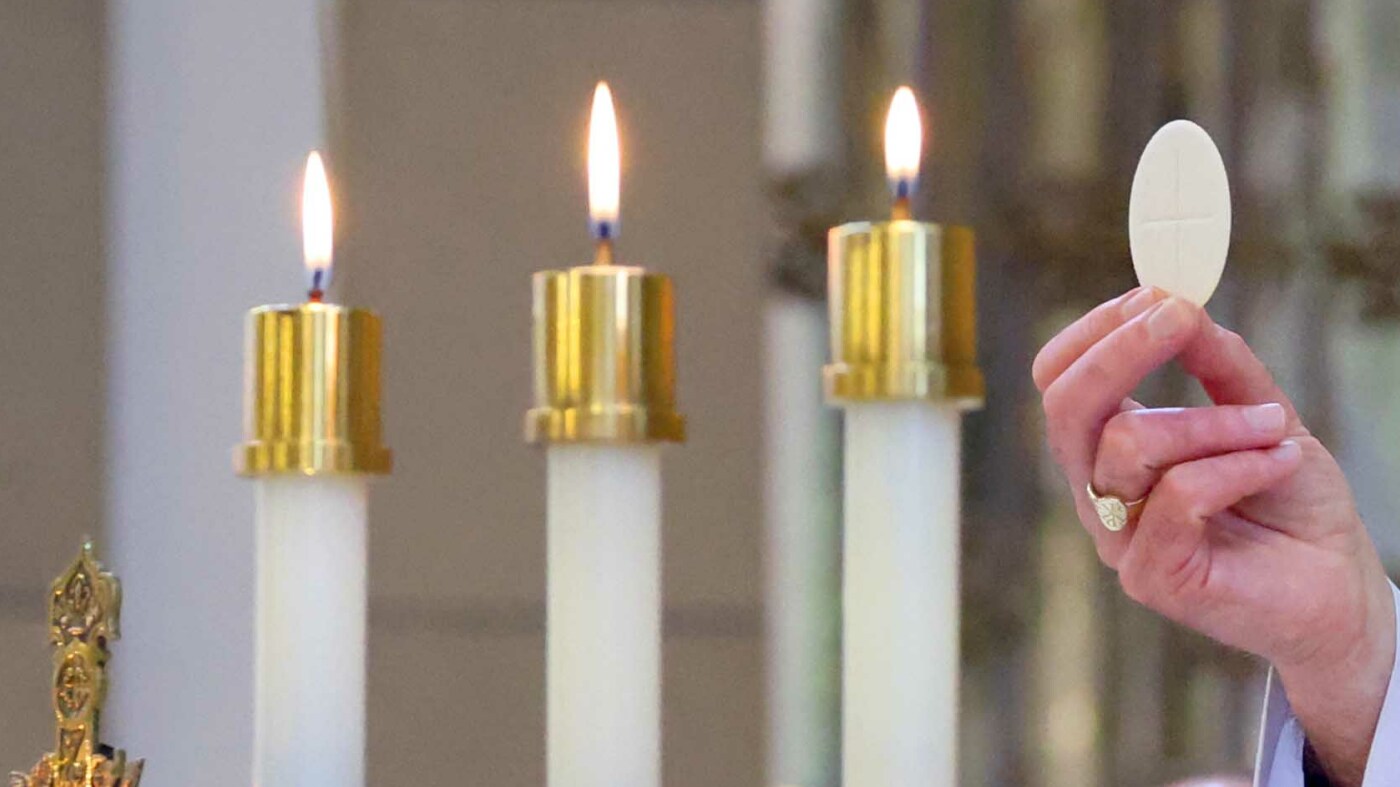
This month's reflection comes from Father Anthony Lappin from the Archdiocese of St Andrew's and Edinburgh.
"I am the Bread of Life."
This declaration by Jesus, one of the seven I am statements he made in John’s Gospel, is the foundational scriptural basis for our understanding of the Eucharist. It bridges both a spiritual reality and the literal belief in the Real Presence of Christ in the Mass, in the form of bread and wine.
In John’s Gospel, after miraculously feeding the multitudes, Jesus shifts the focus of the crowd from physical, perishable food to spiritual nourishment. He declares, ‘I am the bread of life; he who comes to me shall not hunger, and he who believes in me shall never thirst.’ This represents the deepest human yearning for purpose, truth, and eternal life, which can only be satisfied by Christ Himself.
Crucially, our understanding of the Bread of Life Discourse goes beyond mere metaphor. When Jesus later states, ‘my flesh is real food, and my blood is real drink’ (John 6:55), the Church understands this as a command to partake in his literal body and blood. When his followers of the time grumbled and abandoned this seemingly hard teaching, Jesus did not soften his words or dismiss them as a symbol; instead, he reaffirmed the reality of his flesh and blood, and the importance of followers to eat of his flesh and drink of his blood in order to have life within them.
At the Last Supper, Jesus instituted the Eucharist, transforming bread and wine into his own Body and Blood. During the liturgy of the Mass, the bread and wine undergo transubstantiation—their outward appearance remains the same, but their fundamental substance becomes the true Body, Blood, Soul, and Divinity of Jesus Christ.
Therefore, the ‘Bread of Life’ declaration is simultaneously a call to deep faith in Jesus as the Messiah and a physical invitation to communion. By regularly receiving the Eucharist, we are united directly with Christ's sacrifice, nourished spiritually, made one with each other, and given the grace necessary for eternal life.
In Lumen Gentium, the Dogmatic Constitution on the Church (Second Vatical Council), the Eucharist is described as the source and summit of the Christian life.
Get our monthly prayer sent directly to your inbox every month
Back to