Scotland’s solidarity remains a ‘lifeline' in Ukraine
30 March 2026

Written by Hryhoriy Seleshchuk, Vice President of Caritas Ukraine for Programme Development
Four years after Russia’s full-scale invasion, Ukraine risks becoming a familiar but distant war abroad: still tragic, still costly, but no longer treated as urgent. That is the danger.
For Ukraine and Ukrainians, this is not a four-year war at all. It is a 12-year war, beginning in 2014 and escalating in phases ever since.
I am the Vice President of Caritas Ukraine for Programme Development and I live this reality every day; co-ordinating strategic assistance across the entire country. Our message is clear: Ukraine’s humanitarian emergency is not a fixed event, but a "crisis within a crisis.
The UN estimates that 10.8 million people in Ukraine will need humanitarian assistance this year. This is not a picture of stabilisation. It is a picture of war settling deeper into civilian life.
Alongside the immediate humanitarian needs, Ukraine now faces complex long-term social challenges — including population decline, economic strain, and high psychological stress among children, veterans, displaced families and frontline communities.
This past winter provided a chilling example: it wasn’t just bombs that killed people, the cold did too.
Persistent and deliberate bombing of the energy grid left entire districts without power. In February, when temperatures dropped to -20°C, many were left without power. In some Kyiv apartments, temperatures plummeted to +3°C. Residents reported burst pipes and freezing internal systems, effectively making modern homes uninhabitable.
For the elderly living alone on upper floors, their homes became a prison when power and heating failed. In January alone, health authorities recorded more than 1,600 cases of frostbite and hypothermia requiring emergency intervention. The total number of killed and injured civilians in 2025 was 31% higher than in 2024, and 70% higher than in 2023.
Local teams from Caritas Ukraine have had to work around blackouts and heating failures, prioritising:
- Emergency Infrastructure: The establishment of warming points and the distribution of portable power units.
- Essential Supplies: Delivery of hot meals and emergency food kits to isolated households.
- Mobility Support: Specialised transport for individuals with limited mobility cut off from basic services.
This operational environment also directly affects those of us delivering the aid. Our staff members continue to work tirelessly while facing the same issues - enduring prolonged power outages, sporadic water supplies, and sub-zero temperatures in their homes.
While the term “Ukrainian resilience” is frequently spoken of, this endurance is not self-sustaining. This resilience would be impossible without the continued solidarity of the international community, with Scotland’s sustained support providing a critical foundation for these frontline operations.
Scotland’s response has been both visible and sustained. Scotland welcomed more than 29,000 displaced Ukrainains, through the Super Sponsor scheme. The Scottish Government also provided £4m in humanitarian funding for basic support, including health, water and sanitation, and shelter for people fleeing the war.
Part of that solidarity has been channelled through SCIAF, working through the wider Caritas network to reach frontline and hard-to-access communities in Ukraine, as well as refugees in neighbouring countries. That support has included emergency supplies, shelter, psychological support and anti-trafficking work.
There is a personal dimension that the stats cannot capture. A whole generation is coming of age having never known a single day of peace. My own son is now 14; his entire conscious existence has been defined by the shadow of war. He has no memory of a world without air-raid sirens.
Yet, hope persisted this winter. Ukraine survived not just because of national spirit, but because of the knowledge that it was not alone. As global attention is pulled toward the next headline, it is crucial to remember that for the elderly man in a darkened apartment, the war is not "background noise." Solidarity is most valuable not when a crisis is at its loudest, but when the world begins to look away. Without that continued Scottish solidarity, there is no resilience.
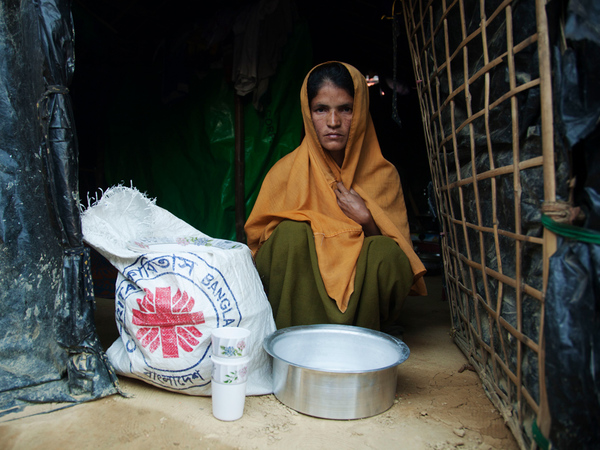
By giving to the Emergency Response Fund, you make sure that help is there for people as soon as a crisis hits.
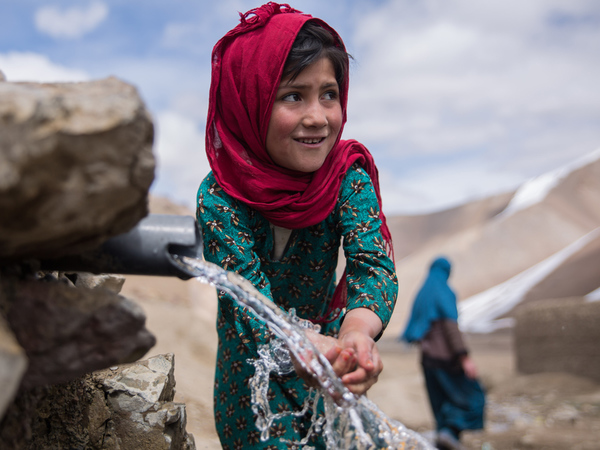
We work to prevent disasters and, when disaster does strike, we work with local partners to deliverer food, water, shelter and support.
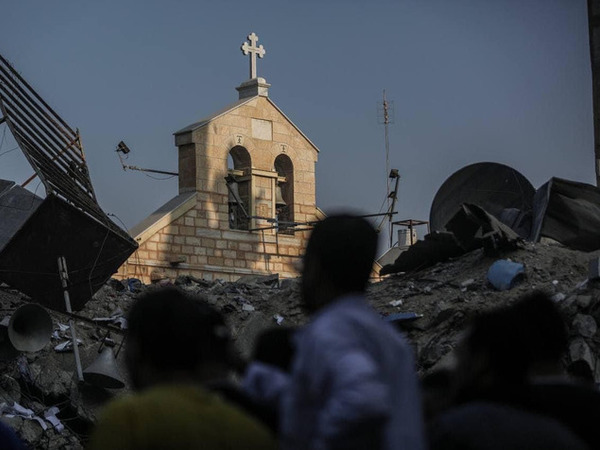
Find a selection of resources to use within your school or parish.