Water in Gaza
12 June 2026
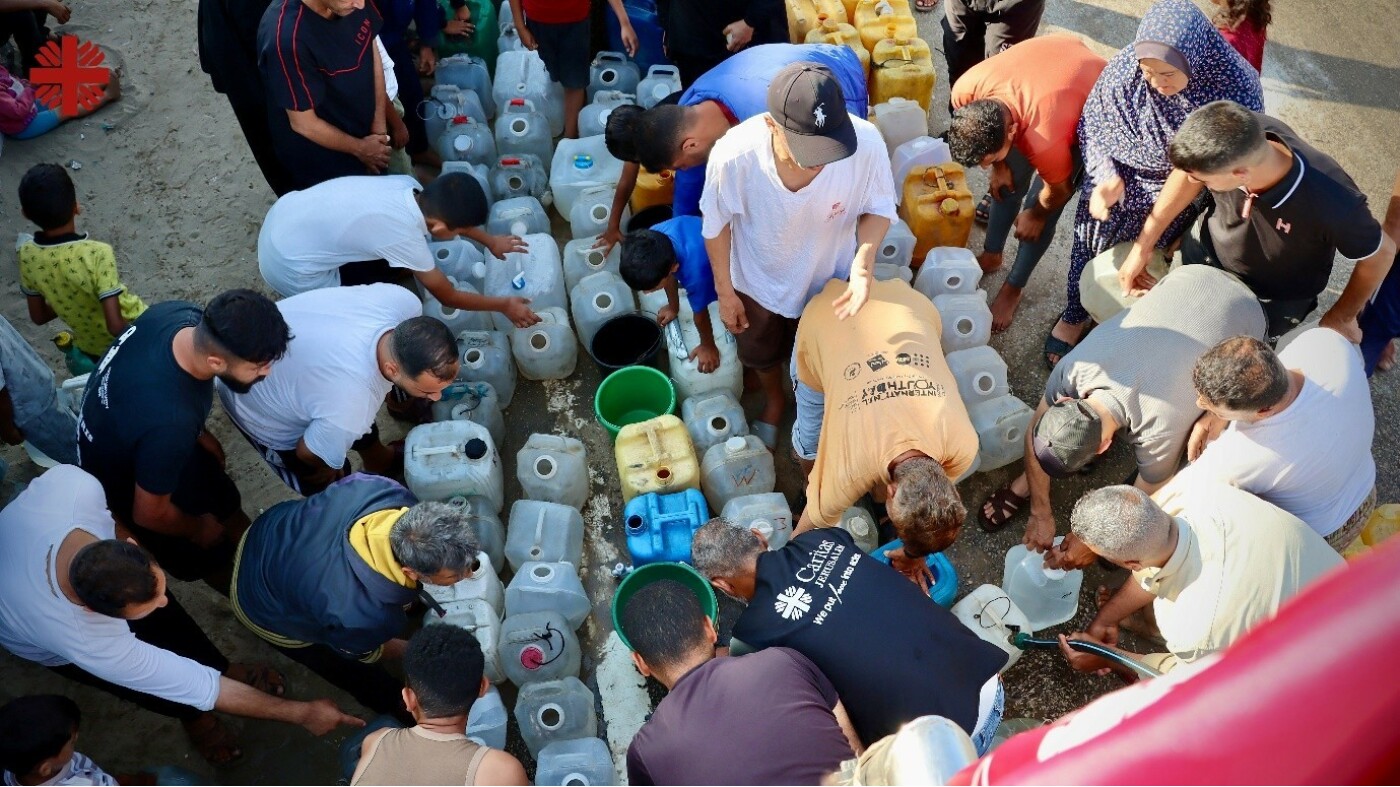
Safe water has become painfully scarce in Gaza - what once sustained daily life has, in many places, become unreliable or unsafe.
Years of repeated damage to water and sanitation systems have left wells, pipelines, sewage networks, and desalination plants destroyed or barely functioning. What once sustained daily life has, in many places, become unreliable or unsafe.
Across neighbourhoods and displacement sites, children walk long distances carrying heavy, empty containers. Parents try to stretch whatever water they can find across drinking, cooking, and washing, often knowing it may not be safe. The quiet calculation of survival, how much water can be spared today, has become part of everyday life.
Behind this struggle is a system under collapse. Damage to sewage infrastructure and lack of treatment have contributed to contamination of Gaza’s coastal aquifer, the main source of freshwater. Untreated wastewater, saltwater intrusion, and debris have further reduced water quality. What remains is often unsafe, but there are few alternatives left.
The health consequences are already visible. Doctors on the ground have reported rising cases of acute watery diarrhoea and hepatitis A, especially among displaced families living in crowded shelters with limited sanitation. For many children, illness is no longer an exception but a recurring part of life shaped by unsafe water and weakened conditions.
Large areas of farmland, olive groves, and vegetation have been damaged or destroyed. Soil that once absorbed rain and supported crops is now degraded and compacted, reducing both food production and the natural renewal of groundwater. The result is a deepening cycle of scarcity: less water, less food, less recovery.
Families are waiting in line for water that may not come, children falling ill from what they must drink, and parents trying to hold together a sense of normal life in conditions that no longer feel normal at all.
Gaza’s water crisis is not only about infrastructure failure. It is about the slow erosion of something far more fragile: the feeling that tomorrow might be easier than today.
Our sister organisation - Caritas Jerusalem – continues to reach some of the most vulnerable and marginalized communities, providing a lifeline through emergency water support.
Please continue to remember the people of Gaza in your prayers.