An update on Gaza's peace plan
26 November 2026
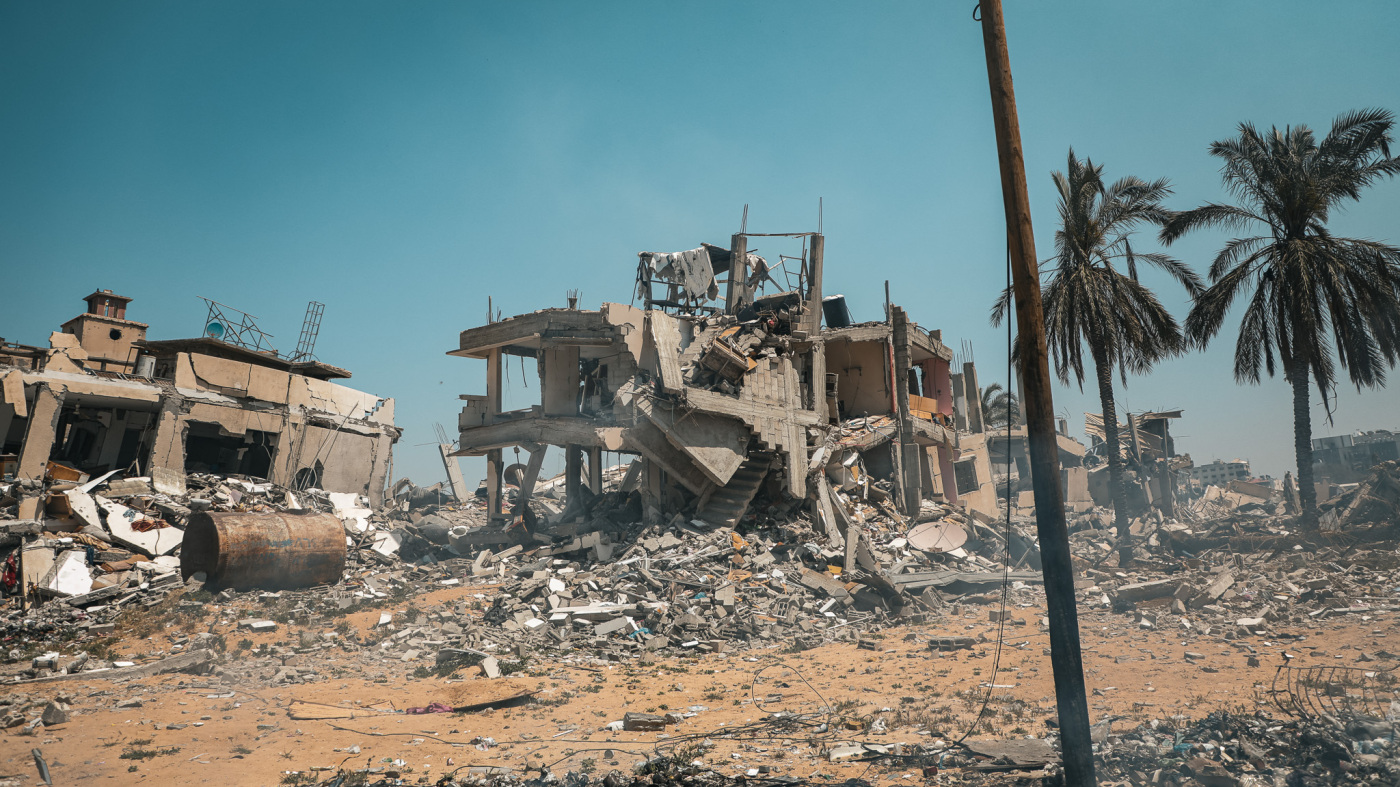
One year after the ceasefire agreement that brought full scale conflict to an end in the Gaza strip, the subsequent peace plan has failed to deliver on its central commitment to civilian protection, humanitarian relief, reconstruction and freedom of movement. Instead, Gazans continue to experience violence, mass displacement and extreme poverty.
At least 1,650 Palestinians have been killed and 5,975 injured since the ceasefire began.
The Israeli military's Yellow Line has progressively moved westwards, expanding Israeli control from approximately 58% to 70% of Gaza, confining much of the population to the remaining 30%.
The agreement envisaged a minimum of 600 humanitarian trucks entering Gaza daily.
In September 2026, the average number of UN-coordinated humanitarian trucks was just 49 per day. Commercial goods cannot substitute for humanitarian assistance, particularly when the majority of the population cannot afford to buy them.
No hospital is fully operational; all six wastewater treatment plants are out of service.
The health system faces shortages of medicines, medical equipment, fuel and essential consumables. Cancer treatment, dialysis, maternity services and emergency surgery are particularly affected.
Approximately 1.8 million people are living in 1,739 displacement sites. Around 45% of displaced households have experienced displacement seven times or more.
The latest IPC analysis - a global standard used to measure and classify the severity of food insecurity and acute malnutrition records more than 1.4 million people (67% of the population) facing “Crisis” or worse levels of food insecurity through December 2026. “Crisis” means having food consumption gaps that are reflected by high or above-usual acute malnutrition. This includes 212,000 people in “Emergency” conditions, reflected in very high acute malnutrition and excess mortality.
Around 90% of the population remains dependent on humanitarian food aid.
Shelter is the most urgent and preventable humanitarian failures. 94% of the population needs shelter or basic household assistance, with approximately 1.2 million people facing critical or catastrophic shelter conditions. 89% of households reported rodents inside their shelters and nearly one million people are living in displacement sites at medium or high risk of flooding.
The first winter storm in November 2026 flooded approximately 70,000 tents in a single day. An infant reportedly drowned, while five displaced people, including three children, died when a sand embankment collapsed onto their tents.
Supplies are available on the borders of Gaza, waiting for Israeli authority clearance; 150,000+ tents, 300,000 tarpaulins and 500,000 tents.
The collapse of health infrastructure is contributing to preventable deaths and worsening public health. The combination of malnutrition, overcrowding, poor sanitation and restricted access to medical supplies is turning otherwise treatable conditions into life-threatening illnesses.
SCIAF continues to call for as an absolute minimum:
- The opening of all Gaza crossings fully and consistently.
- Unrestricted entry of humanitarian supplies, including shelter materials, medicines, fuel and water infrastructure into the strip.
- The removal of restrictions on WASH, pest-control, rubble-removal and power-generation equipment.
- A guarantee that international humanitarian organisations can operate freely and bring in personnel and supplies.
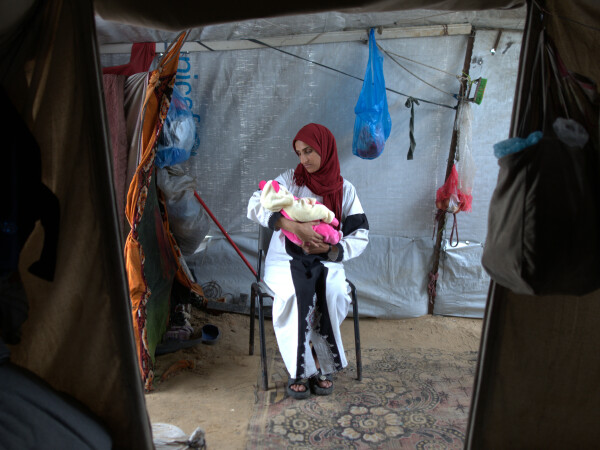
The plight of the citizens of Gaza is a subject very close to our hearts and those of our supporters, keen to reach out in love to their sis
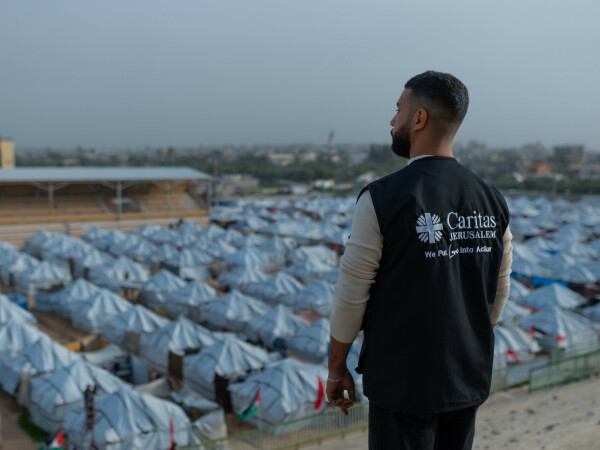
This article was written by our partners at Caritas Jerusalem as a way of displaying their deep respect for healthcare workers in Gaza.
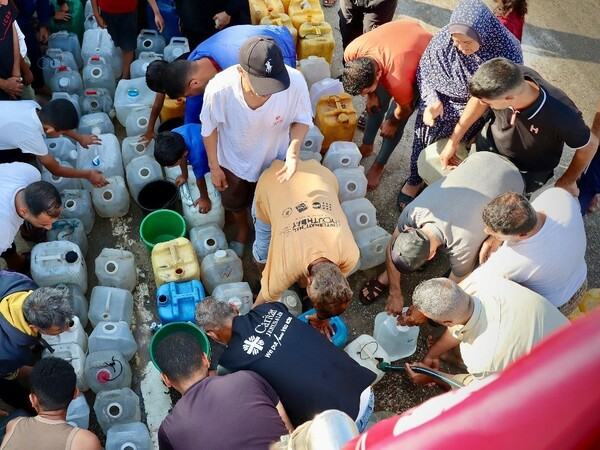
Gaza lies along the Mediterranean coast, yet safe water has become painfully scarce. What once sustained daily life has become unsafe.
Back to