Reading for connection – why books still matter
6 February 2026
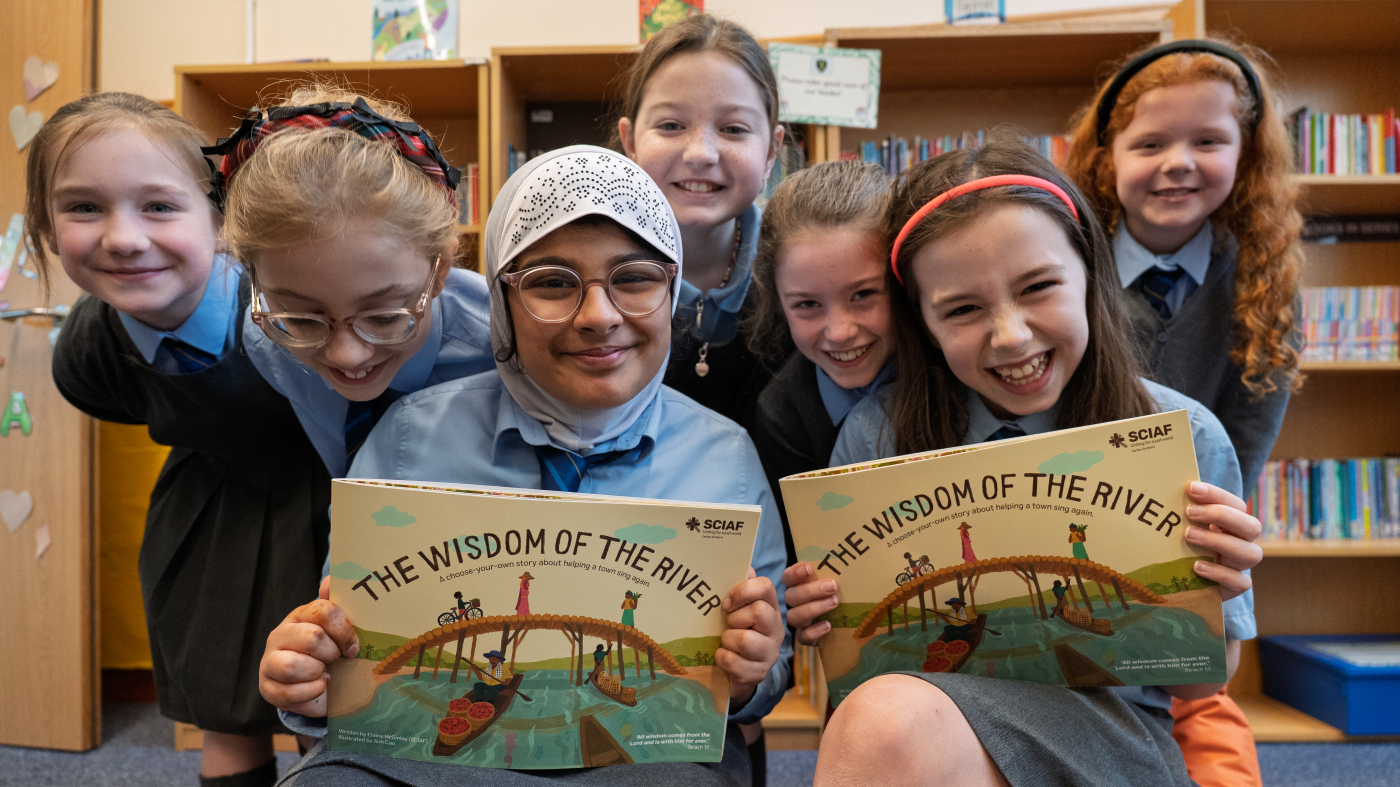
Elaine McGinlay, SCIAF's Development Education Officer, has written a children’s book which explores how communities flourish. Read her blog post below to learn about the benefits of reading and how it's evolving for young people who are navigating the digital age.
The joy of reading was very much alive this Reading Schools Week. Across Scotland, schools celebrated storytelling in all its forms — books, songs, films, video games, podcasts.
A recent report from the National Literacy Trust shows that reading habits are changing. Many young people now read song lyrics, online content and digital text as part of everyday life. Rather than shrinking, reading has expanded into new forms and spaces.
What really stands out in the report is why young people say they read. Among those who choose to read books in their free time, around a quarter say they do so to explore issues they care about or to feel connected to the wider world.
Books, in particular, offer a special kind of space for curious readers looking for connection. They allow readers to slow down — there’s no scrolling past or pop-ups pulling attention elsewhere. Unlike fast-paced digital content, books invite reflection and our own interpretation of situations. Stories help big global issues feel less overwhelming by grounding them in people, places and choices we can connect with. They give readers the chance to step into lives and landscapes beyond their own experience, and stay there for a while.
SCIAF’s new children’s book, The Wisdom of the River, was written with this in mind. The story follows a community living on the banks of a river, and the choices they face as they work together to help their town flourish. Through a choose-your-own-story adventure, readers navigate challenges drawn from the real experiences of SCIAF’s partner communities around the world.
Every Catholic primary school in Scotland has now received a copy of The Wisdom of the River, and we’re delighted to hear how it’s helping young people feel more connected — not just to SCIAF’s work but to the world beyond their own communities.
Because when stories help us feel connected, they do far more than entertain. They help us understand our shared world, and our place within it.
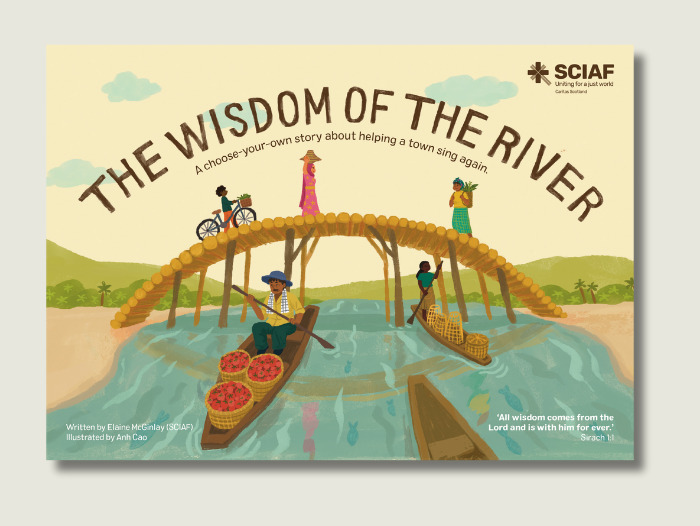
The Wisdom of the River
Learn all about SCIAF's brand-new choose-your-own-adventure story!

The Wisdom of the River is the brand-new children's book created by SCIAF!
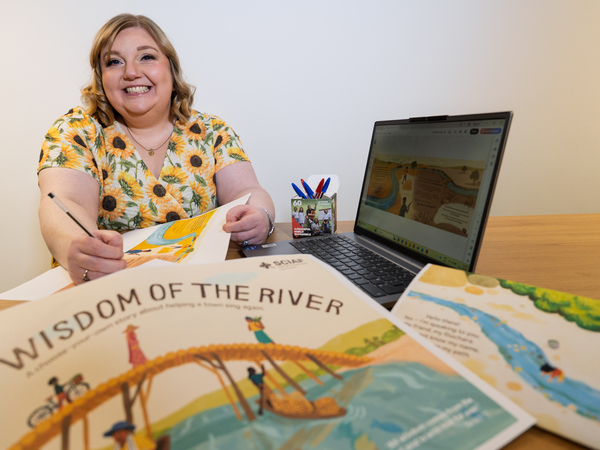
Elaine McGinlay has recently become an author of a children's book, which explores how communities flourish.
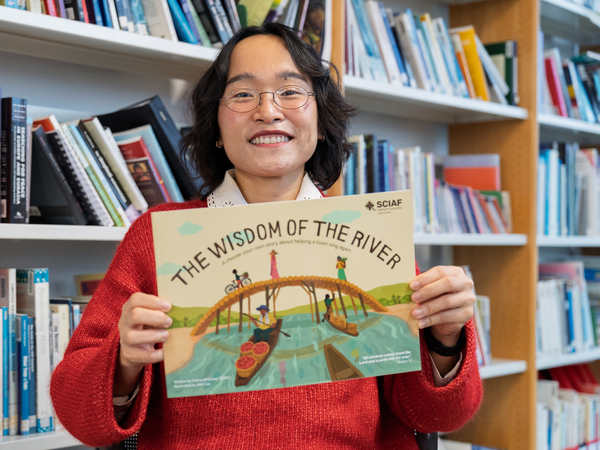
Download this resource that outlines three lessons that support SCIAF's brand-new children's book.