Aid cuts and Malawi weather monitoring
17 February 2026
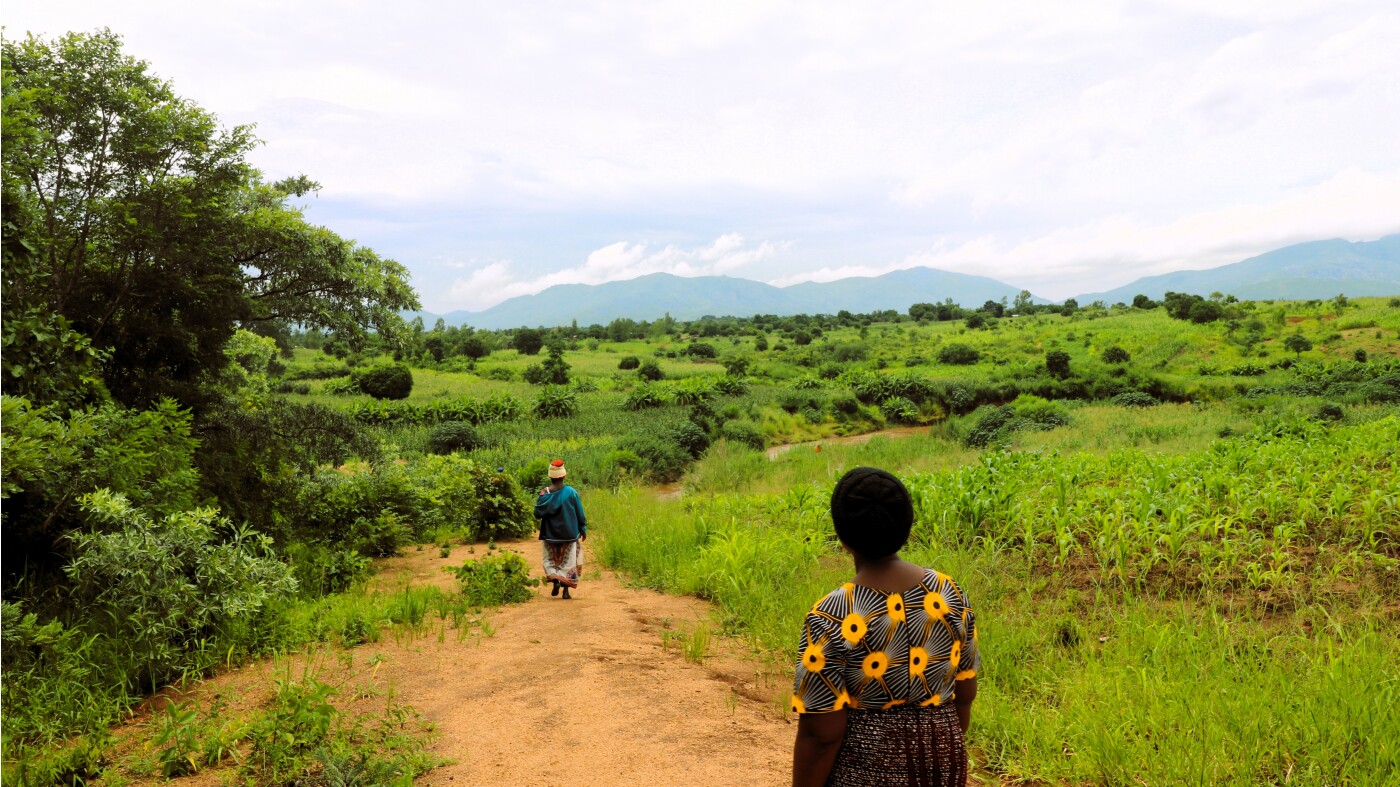
Why the Loss and Damage Can No Longer Delay.
By Alphaeus Ngonga (SCIAF Advocacy Team)
As the world was looking forward to a new year, Malawi was once again not spared from the continued devastating impacts of climate change. Continuous rainfall left the people of Malawi desperate for survival. This comes at a time when the UK government announcement of aid cuts and the USA withdrawal from critical climate treaties have amplified existing global injustices, leaving countries like Malawi with even fewer resources to confront climate induced disasters.
The crisis is being further exacerbated by a series of budget cuts to the U.S. National Oceanic and Atmospheric Administration (NOAA) and the National Weather Service (NWS). These agencies provide global weather data, including the Global Forecasting System (GFS) which countries Kenya (Kenya Meteorological Department) and other regional forecasters rely on to track weather trends like cyclones, droughts and floods. With the proposed 2026 further budget reduction of over $1.5 billion of the agency's funding, NOAA has already been forced to slash hundreds of jobs and reduce the frequency of weather balloon launches that provide critical data for climate modelling. For the Global South, these cuts eliminate access to free, high-quality early warning data, potentially forcing meteorologists to operate with significant uncertainty as they try to forecast the very floods and cyclones devastating the region including Malawi.
Malawi Floods 2026
At the end of December 2025 and into early January 2026, heavy torrential rains swept across Malawi, causing extensive damage to households, livelihoods, and infrastructure. Kasungu municipality, Nkhota kota District Council, and the Lakeshore areas were the hardest hit, with floods washing away important infrastructure. In response, the Malawi Defence Force (MDF) deployed rescue teams to assist evacuation efforts in the worst‑affected Lakeshore districts, working alongside DoDMA to relocate stranded residents to designated emergency camps.
The Department of Disaster Management Affairs (DoDMA), in its 8 January 2026 press release, reported that across the 29 councils, 36 people had died, 168 were injured, 2 were missing, and 160,011 had been affected.
As of 7 January 2026, Nkhota Kota District was the most severely affected council, recording 10,772 affected households, including 2,132 that were displaced. The district also registered 12 deaths, 2 missing persons, and 37 injuries. A total of 12 displacement camps were established, 9 of which were schools disrupting learning for 158,351 learners across primary and Community Day Secondary Schools (2026, Nkhota‑Kota District Council Situation Report No. 4). In Kasungu alone, 2,775 households across 17 traditional authorities were affected, and 10 people sustained injuries. The floods also destroyed critical infrastructure, particularly bridges in M1 and M5 roads, severing community connections and disrupting transportation.
Loss and Damage
When SCIAF speaks of Climate change Loss and Damage, we refer to the costs of a crisis that can no longer be avoided through adaptation. The bursting of the rivers and dams affecting thousands of hectares of crops, will have a devastating impact on food security for the year ahead. At the same time, the destruction of critical infrastructure such as bridges have paralysed trade and have affected the transportation of relief items as trucks are left stranded.
Equal attention must be given to the non‑economic losses endured by affected communities, and these are losses that cannot be quantified in monetary terms. The trauma families endured as their homes collapsed in the dead of night, coupled with the profound loss of dignity for those forced into overcrowded primary schools turned into makeshift displacement camps, powerfully exposes the injustice they face and strengthens the urgent call for immediate loss and damage funding.
The Global Injustice.
Although decisions about aid flows to vulnerable nations are inherently political, the UK’s morality‑driven approach, aimed at protecting its own welfare and strategic priorities, fail to account for the wide‑ranging consequences of abruptly withdrawing support to countries like Malawi. At the same time, the USA’s withdrawal from international climate treaties, budgets cuts to weather monitoring US agencies, and the freezing of aid to countries like Malawi, which are already facing repeated climate shocks and slow recovery, is a double blow to its already fragile economy. Despite the cuts, SCIAF has stood with Malawi for decades both long-term development activities and emergency relief for vulnerable communities. SCIAF were proud when Scotland pledged the Loss and Damage funding at COP26. The Loss and Damage funding has enabled our partners to rebuild after previous climate related disasters such as cyclones.
However, the 2026 floods in Malawi underscore a systemic global failure in climate finance. While the Fund for Responding to Loss and Damage (FRLD) is technically operational, its slow and bureaucratic process reflect a worldwide inability to deliver timely and equitable support to those most affected by climate change related disasters We understand that countries like Malawi have contributed less to GHG emissions and the Global community cannot ask the people of Malawi to simply “be resilient” any longer. SCIAF therefore calls on the international community to fund the reconstruction of climate resilient bridges and roads so that lakeshore roads such as the M5 does not wash away every time the rains turn heavy.
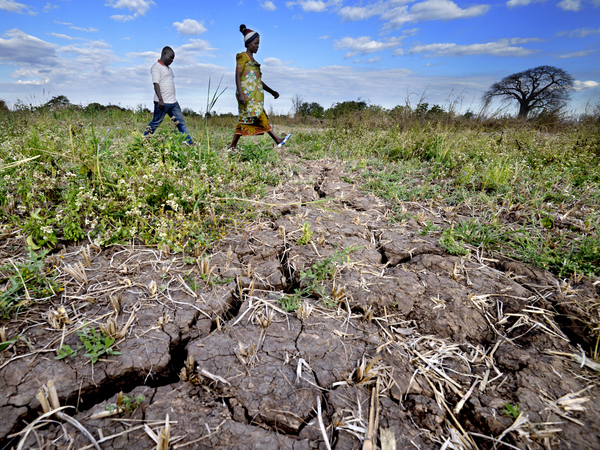
Alphaeus Ngonga, a member of SCIAF’s Advocacy team, monitored COP30 negotiations and side events remotely from Glasgow.
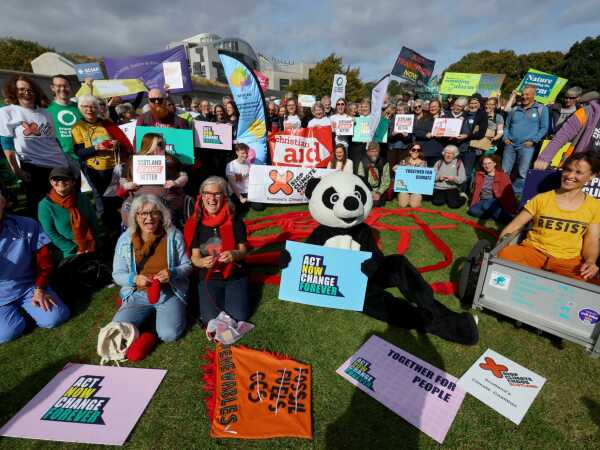
SCIAF staff and supporters proudly joined in Scotland’s biggest ever pro-climate event today in Edinburgh.

Anne Callaghan, SCIAF's Advocacy and Campaigns Officer, was in Bonn in Germany for the preparatory conference on climate change.